Eyad
N.
Daher
eyaddaher.com

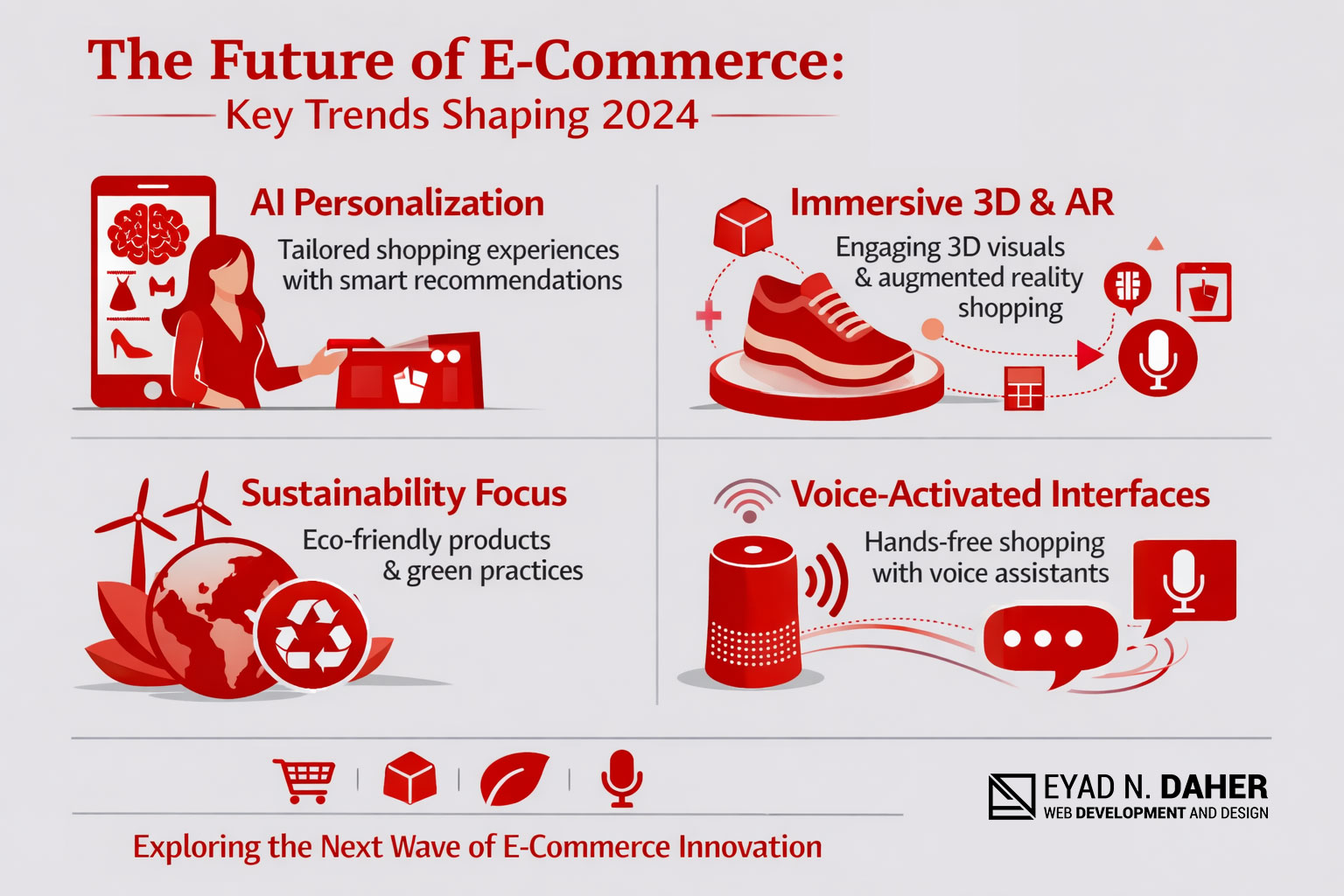
Digital experiences are evolving faster than ever. Businesses that want to stay competitive must look beyond traditional websites and apps and embrace emerging technologies that focus on personalization, immersion, responsibility, and accessibility. Four trends are shaping this next era: AI personalization, immersive 3D & AR experiences, sustainable web practices, and voice user interfaces (VUIs).
AI Personalization: Experiences That Adapt to the User
Artificial Intelligence has moved personalization from simple recommendations to dynamic, real-time user experiences. Modern AI systems can analyze behavior, preferences, location, and interaction patterns to tailor content, layouts, and calls-to-action.
Examples include:
-
Personalized product recommendations in e‑commerce
-
Dynamic landing pages that change based on user intent
-
Smarter email and notification targeting
The result is higher engagement, improved conversions, and a digital experience that feels human rather than generic.
Immersive 3D & AR: From Screens to Experiences
3D and Augmented Reality (AR) technologies are redefining how users interact with digital products. Instead of passively consuming content, users can explore, visualize, and interact.
Use cases include:
-
3D product previews in online stores
-
AR product placement in real-world environments
-
Interactive virtual tours and presentations
As web technologies like WebGL and WebXR mature, immersive experiences are becoming more accessible—directly through the browser, without the need for dedicated apps.
Sustainability in Digital Design: Building Responsibly
Sustainability is no longer limited to physical products. Digital platforms also have an environmental footprint. Heavy assets, unoptimized code, and inefficient hosting all contribute to increased energy consumption.
Sustainable web practices focus on:
-
Optimized images and media
-
Lightweight, performance-first design
-
Efficient hosting and caching strategies
A sustainable website is faster, more accessible, and better for both users and the planet.
Voice User Interfaces: Hands-Free, Natural Interaction
Voice User Interfaces (VUIs) are transforming how users interact with technology—especially on mobile devices, smart speakers, and wearables. Voice allows for natural, hands-free communication and improves accessibility for a wider audience.
Applications include:
-
Voice search and navigation
-
AI voice assistants for customer support
-
Voice-driven smart home and IoT control
As voice recognition becomes more accurate and multilingual, VUIs will become a standard layer of interaction rather than a novelty.
Looking Ahead
The future of digital experiences lies in combining intelligence, immersion, sustainability, and accessibility. Businesses that adopt these technologies early will not only stand out—but also create meaningful, future-proof connections with their users.
Whether you are building a brand, a platform, or a product, embracing these trends today means being ready for tomorrow.