Eyad
N.
Daher
eyaddaher.com

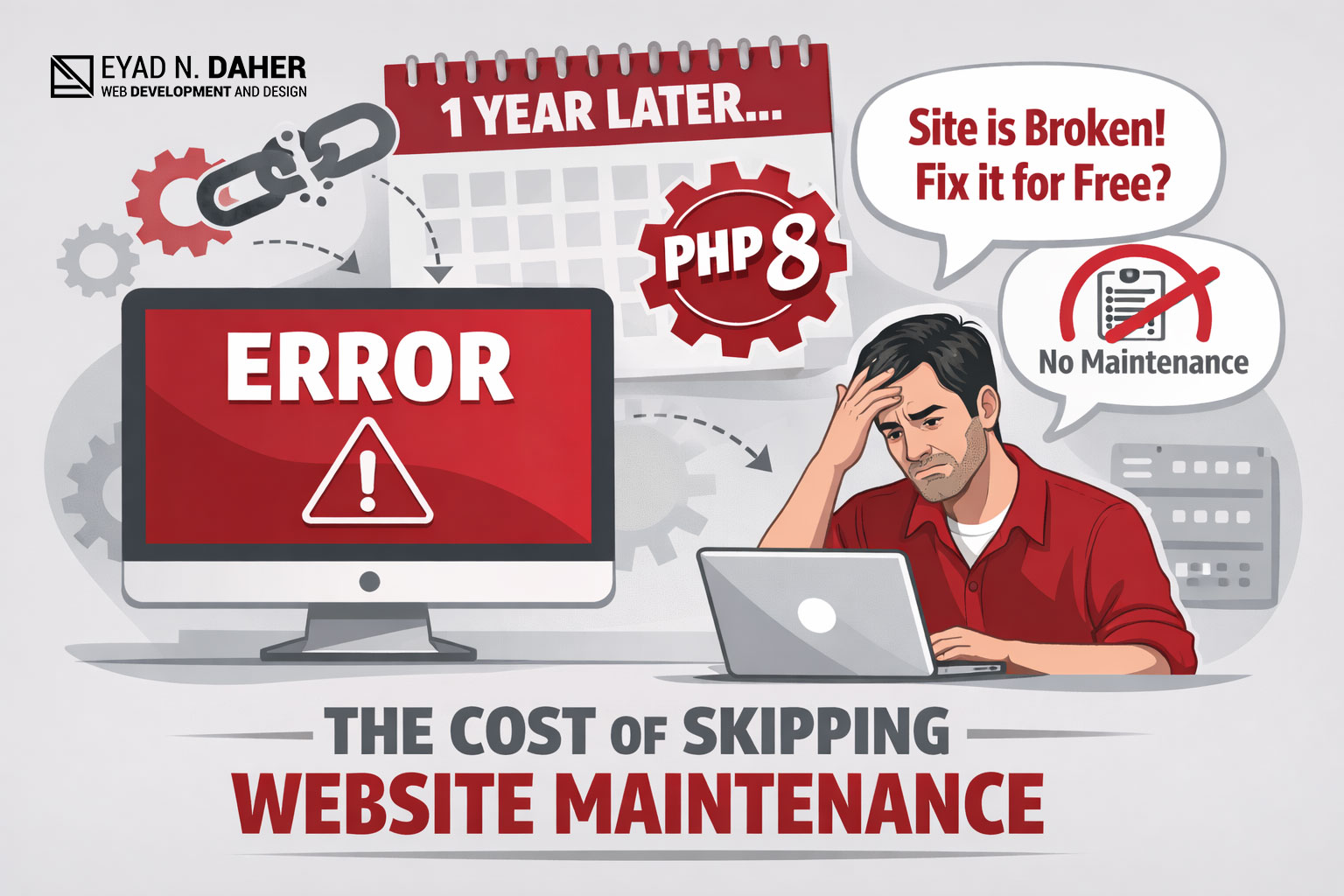
Many clients who hire a freelance web developer focus primarily on one thing: getting the website built and launched. Speed, cost, and features dominate the discussion, while an essential part of the project is often overlooked—or intentionally removed from the contract: website maintenance.
At first glance, skipping maintenance may seem reasonable. The website works, it looks good, and everything functions as expected. So why pay extra for something that doesn’t feel immediately necessary?
Unfortunately, this mindset often leads to problems later.
The Missing Maintenance Clause
In many freelance projects, developers clearly propose a maintenance section in the contract. This typically includes:
- Server and software compatibility checks
- CMS, plugin, or library updates
- PHP version compatibility updates
- Security patches
- Bug fixes caused by external changes
Sometimes, clients refuse or disagree with this section, usually to reduce costs. The contract is signed without maintenance, and the project ends once the website is delivered and approved.
From a legal and professional standpoint, this closes the developer’s responsibility for future changes—unless a new agreement is made.
One Year Later: The Problem Appears
Fast forward a year.
The hosting provider upgrades the server environment, for example:
- PHP 7.x → PHP 8.x
Suddenly:
- Certain functions are deprecated
- Older code throws fatal errors
- Forms stop submitting
- Admin panels break
- Entire pages become inaccessible
The website no longer works as expected.
At this point, the client often returns to the original developer with a request like:
“The site you built is broken. Can you fix it?”
And sometimes the follow-up:
“This should be free, right?”
The Hard Truth: This Is Not a Bug—It’s Environment Change
What many clients don’t realize is that the website did not suddenly become faulty.
- The website was built correctly for the server environment at the time of delivery
- The contract did not include long-term maintenance
- The breaking change was caused by external system updates, not development mistakes
PHP upgrades, security patches, and server changes are normal and inevitable. Websites are not static products; they are living systems that depend on constantly evolving technology.
Why Free Fixes Are Not Reasonable
When maintenance is excluded from the contract:
- The developer is not obligated to monitor server updates
- Compatibility testing is not included
- Code refactoring for future versions is not accounted for
- Time, effort, and expertise required later are new work
Expecting free fixes in this case is similar to refusing a car service plan and then asking the mechanic to repair engine wear for free a year later.
Maintenance Is Protection, Not an Upsell
Web maintenance is often misunderstood as an unnecessary extra. In reality, it is:
- Insurance against downtime
- Protection against security risks
- A guarantee of long-term functionality
- A cost-saving decision compared to emergency fixes
Clients who invest in maintenance benefit from predictable costs and fewer surprises. Those who don’t often end up paying more—urgently and unexpectedly.
The Developer’s Responsibility vs. the Client’s Choice
Professional freelance developers are responsible for:
- Delivering a functional website based on the agreed requirements
- Ensuring compatibility with the current environment at delivery
Clients are responsible for:
- Understanding what is included and excluded in the contract
- Accepting the consequences of rejecting maintenance
- Requesting and budgeting for future updates when needed
Clear contracts protect both sides—but only if they are respected.
Final Thoughts
Technology evolves, servers change, and software gets updated. Websites that are not maintained will eventually break—not because they were poorly built, but because maintenance was never part of the plan.
Refusing a maintenance contract does not stop technical change. It simply transfers future risk entirely to the website owner.
For clients and developers alike, the lesson is simple:
A website without maintenance is not finished—it’s just waiting.